

— Lifestyle · September 21, 2026
5 Steps to Approach Weight Loss the Right Way
Build a practical plan around your life, then give it the time and support it needs to last.

Losing weight successfully is less about finding a quick fix and more about building a plan you can live with. Nutrition, movement, sleep, and stress all matter. Start with one manageable change and adjust as you learn what works for you. [1]
Start where you are
Notice your routine without judging it.
Make the next step small
Choose an action you can repeat this week.
Keep adjusting
Progress rarely follows a straight line.
— 01
Know your motivation
Before changing your routine, get clear on why you want to make the change. It might be a family history of heart disease, more energy for daily life, or a personal health goal. Write it in your own words so you can return to it on hard days.
Even a modest reduction, around 5% of body weight, can bring improvements in blood pressure, cholesterol, and blood sugar for some people. Health benefits matter alongside the number on the scale. [1]
Try this: write one reason that feels meaningful to you and keep it where you can see it.
Your why
A reason to keep going
There is no single right motivation.
More energy | Health | Confidence | Family
— 02
Get a clear picture of where you’re starting
Track your eating habits, activity, sleep, and stress for a few days. This gives you a baseline and may reveal patterns you can work with, such as late meals, a busy schedule, or short sleep.
A simple note on your phone is enough. The aim is to spot opportunities, not to label a day as good or bad. [1]
Try this: jot down meals, movement, and sleep for three days, then circle one pattern to address.

Notice the routines you already have, including meals that work well for you.
— 03
Set goals that are specific and doable
“Exercise more” can be hard to act on. A goal such as “walk for 15 minutes on Monday, Wednesday, and Friday” tells you exactly what to try. Focus on one or two changes at once, and expect to revise them when life gets busy. [1]
For adults, public health guidance recommends working toward at least 150 minutes of moderate activity a week plus muscle-strengthening activity on two days. You can start below that level and build up as appropriate for your health. [2]
Try this: put one short walk on your calendar this week.

Choose movement you enjoy and build from your current ability.
— 04
Build a support system
Family, friends, coworkers, and health professionals can help you stay connected to your plan. Ask for the kind of support that would actually help: a walking partner, shared meal planning, or an appointment with a dietitian.
Medical guidance can also help you review your health history and discuss treatment options, including nutrition counseling, medication, or surgery when appropriate. [1]
Try this: tell one person your next small goal and what kind of encouragement you want.
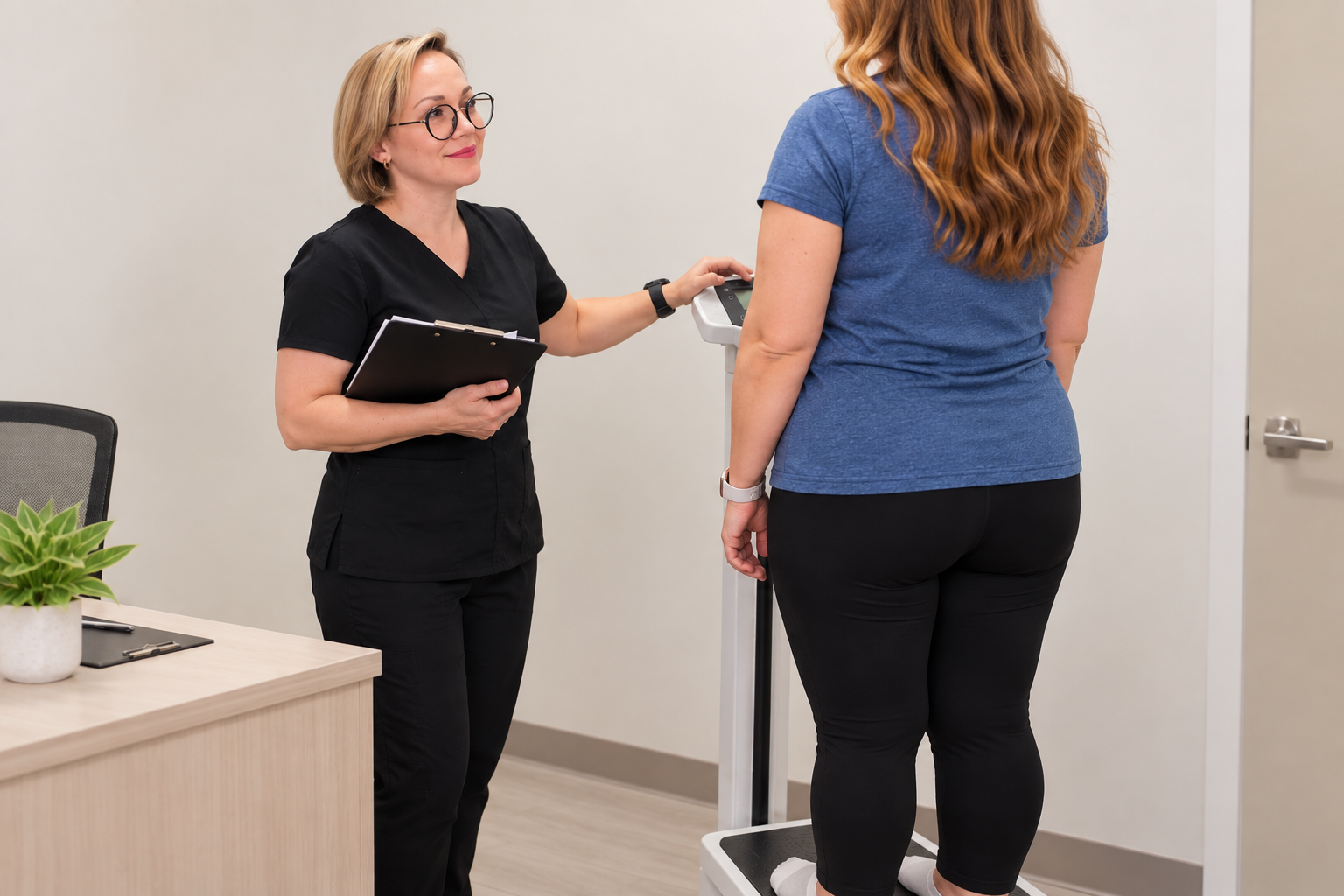
A clinician can help tailor a plan to your health and goals.
— 05
Check in on your progress regularly
Revisit your goals often. If something is not working, adjust it instead of abandoning the whole plan. Notice wins beyond weight, such as more energy, stronger routines, better sleep, or improved health measures.
Celebrate progress in a way that supports your goals. Consistency is built one repeatable decision at a time. [1]
Try this: once a week, note one win, one obstacle, and one change to try next.
Week by week
A simple progress check
One win → One obstacle → One next step
— A plan you can use
Put the five steps together
✓ Write down the reason this matters to you.
✓ Observe your routine for a few days.
✓ Choose one specific action for the next week.
✓ Ask someone for useful support.
✓ Review what worked and adjust your plan.
Want guidance tailored to you?
Our team can help you discuss medical and surgical weight loss options alongside lasting lifestyle habits.
References
Centers for Disease Control and Prevention. Steps for Losing Weight.
Centers for Disease Control and Prevention. Adult Activity: An Overview.
Health information: This article is educational and does not replace individualized advice. If you have a medical condition or are recovering from surgery, discuss activity and treatment changes with your clinician.
Dr. Sergio Quiñones Metabolic Surgery Center · Educational information, individualized care.