

— Women’s health · September 21, 2026
PCOS and Weight Loss Surgery: How Bariatric Surgery Can Help Manage Symptoms
For women whose PCOS has not responded to diet, exercise, or medication, bariatric surgery is emerging as an option that targets hormonal and metabolic drivers—not only the symptoms.
Important: This article is for informational purposes only and is not a substitute for personalized medical advice. Talk to your OB-GYN and a qualified bariatric surgeon before making treatment decisions.
What is PCOS?
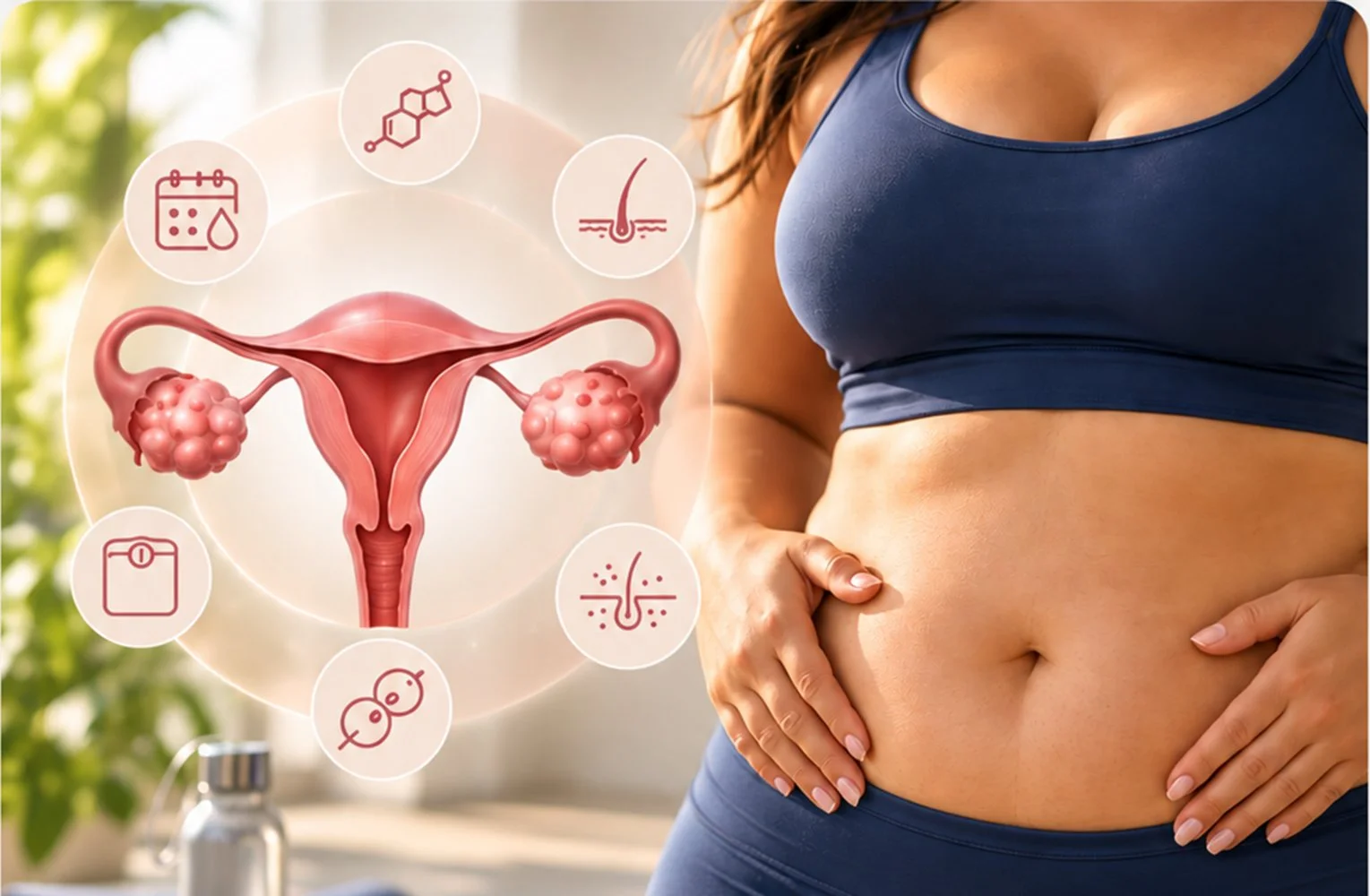
Polycystic Ovary Syndrome (PCOS) affects roughly 1 in 10 women of childbearing age, according to the U.S. Office on Women’s Health. It occurs when the ovaries or adrenal glands produce higher-than-normal levels of androgens, which can disrupt ovulation.
Irregular or absent menstrual periods
Difficulty getting pregnant
Excess facial or body hair growth
Acne and oily skin
Weight gain, particularly around the abdomen
Patches of thick, darker, velvety skin
Multiple small cysts on the ovaries
PCOS is also associated with increased long-term risks of type 2 diabetes, heart disease, and metabolic syndrome, making it more than a reproductive health issue.
PCOS, obesity, and insulin resistance
Insulin resistance is central to PCOS for many patients. Excess insulin can stimulate the ovaries to produce more androgens, creating a cycle in which obesity worsens insulin resistance, insulin resistance worsens PCOS symptoms, and those symptoms can make weight loss more difficult.
Up to 70%
of women with PCOS may have some degree of insulin resistance, according to the clinical research summarized in the supplied article.
Even modest weight loss may help interrupt this cycle. The article notes that losing about 5% of body weight can improve menstrual regularity and other PCOS symptoms, although sustained weight loss may be difficult for patients with more severe obesity.
How bariatric surgery may help
Metabolic and hormonal effects
Significant, sustained weight loss
Improved insulin sensitivity, helping interrupt the insulin-androgen cycle
Reduced androgen levels, which may improve acne and excess hair growth
Reduced risk of type 2 diabetes, high blood pressure, and obstructive sleep apnea
Reproductive effects
Restoration of regular menstrual cycles
Improved fertility outcomes for some women who previously struggled to conceive
79%
Achieved menstrual-cycle remission one year after surgery in the sleeve-gastrectomy cohort cited in the PDF.
65.3 kg
Final body weight in the surgery group versus 81.9 kg in the medication group in the cited non-randomized comparison.
The article reports that research published in the Journal of Clinical Endocrinology & Metabolism found surgical treatment more effective than medication alone for improving weight, menstrual recovery, and hormonal markers in women with obesity and PCOS.
Gastric sleeve and Gastric bypass
Gastric sleeve
Removes approximately 80% of the stomach, leaving a narrow sleeve. It generally involves a shorter recovery and is the most commonly performed procedure.
These descriptions are simplified. The appropriate procedure depends on BMI, medical history, symptoms, and an individualized surgical assessment.
Gastric bypass
Creates a small stomach pouch and reroutes the small intestine. It may produce greater weight loss but is more complex and carries a higher long-term malabsorption risk.
Who may be a candidate?
Candidacy is determined through a complete medical evaluation. The PDF highlights factors such as BMI, related health conditions, previous attempts at weight loss through diet, exercise or medication, overall health, and the ability to follow the required long-term lifestyle changes.
Risks and long-term responsibilities
Like any major operation, bariatric surgery carries risks, including infection, bleeding, blood clots, and potential nutrient deficiencies. Lifelong monitoring and supplementation may be necessary, and recovery includes several stages of dietary adjustment.
What research still does not tell us
Bariatric surgery is not a guaranteed cure for every aspect of PCOS. While metabolic markers such as cholesterol and blood sugar often improve, changes in testosterone levels and ovarian appearance may be more limited. More long-term research is still needed.
Surgery should be considered one part of a broader treatment plan developed with an OB-GYN and a qualified bariatric surgeon—not a standalone solution.
— The bottom line
Could surgery help manage your PCOS?
A consultation with a bariatric specialist can help you understand candidacy, procedure options, risks, and what to expect.
Talk with our team
Ask about PCOS and weight loss surgery.
References provided in the article
U.S. Office on Women’s Health — Polycystic Ovary Syndrome (PCOS).
Wang, F.F., et al. — Efficacy of Bariatric Surgery in the Treatment of Women With Obesity and Polycystic Ovary Syndrome. Journal of Clinical Endocrinology & Metabolism, 2022.
Benham, J.L., et al. — Impact of Bariatric Surgery on Anthropometric, Metabolic, and Reproductive Outcomes in PCOS: A Systematic Review and Meta-Analysis. Obesity Reviews, 2024.
Total weight loss rather than preoperative BMI correlates with remission of irregular menstruation after sleeve gastrectomy in PCOS. PubMed Central.
A Review of the Impact of Bariatric Surgery in Women With PCOS. PubMed Central.
Effects and Mechanisms of Bariatric Surgery in Relieving Obesity and Its Complications. Frontiers / PubMed Central.
Dr. Sergio Quiñones Metabolic Surgery Center · Educational information, individualized care.